Which Brush Heads Fit Oral-B and Sonicare Handles?
Choose electric toothbrush replacement heads by handle family first: Oral-B iO heads fit iO Series handles only, while CrossAction fits most Oral-B rechargeable handles. Sonicare C2 and C3 use click-on attachments; C2 excludes Philips One and e-series, and C3 needs an exact-model compatibility check.
On this page (10 sections)
- Which electric toothbrush replacement heads fit Oral-B handles?
- Which Sonicare brush heads fit Philips Sonicare handles?
- How can you identify your toothbrush handle before buying?
- How do you choose between compatible head styles?
- How should you attach a new replacement head?
- What if a replacement head does not fit?
- How should you clean and store replacement heads?
- When should you replace a brush head?
- Which replacement-head mistakes should you avoid?
- Which electric toothbrush replacement heads should you choose?
Choose electric toothbrush replacement heads by handle family first, then compare the bristle design and pack size. Oral-B iO, other rechargeable Oral-B handles, and Philips Sonicare click-on handles need different compatibility checks.
For an iO handle, choose the iO option below. For Sonicare, C2 suits everyday plaque-focused brushing, while C3 adds a stain-removal focus; CrossAction is an option for other rechargeable Oral-B handles once you confirm fit.
A replacement head should match both your toothbrush and your daily routine. Start with the connection, then decide which features solve a problem you actually have.
Which electric toothbrush replacement heads fit Oral-B handles?
Oral-B iO heads fit iO Series handles only, while CrossAction fits most rechargeable Oral-B handles. Check your exact model before ordering either type.
| Handle family | Head to consider | What to confirm |
|---|---|---|
| Oral-B iO | Oral-B iO replacement head | The handle belongs to the iO Series |
| Other rechargeable Oral-B handles | CrossAction | Your exact model supports this head |
| Philips Sonicare | A compatible Sonicare head | Neither Oral-B option is a Sonicare replacement |
The word “Oral-B” on both packages does not make the heads interchangeable. Treat the handle family as the first filter, before color, pack size or cleaning features.
Are Oral-B iO electric toothbrush replacement heads universal?
iO heads are specific to the iO Series, so choose them only after identifying your handle as an iO model. A similar-looking round head is not enough to confirm the connection.
If several people in your home use Oral-B brushes, check each handle separately. Keep spare packs labeled by handle family so someone does not open the wrong refill.
Who should choose the Oral-B iO option?
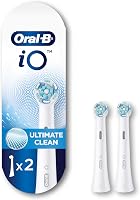
Choose this pack if you have an iO handle and want genuine replacement heads designed for everyday plaque cleaning. It includes 4 heads, each individually packaged.
The round head is designed to clean each tooth, which suits a brushing routine where you guide the head slowly from tooth to tooth. Avoid treating it like a manual brush and scrubbing quickly across several teeth.
Skip this option if your handle is outside the iO family. Neither the pack size nor the cleaning design makes it a suitable workaround for a different connection.
For one person following the recommended replacement interval, the pack provides about a year of scheduled changes. If several people share a compatible handle, each person still needs a separate head and replacement schedule.
Our guide to Oral-B iO replacement heads covers that family separately.
Who should consider CrossAction?
Choose CrossAction if your rechargeable Oral-B model supports it and you want a plaque-focused head with a visible replacement cue. Its bristles are angled at 16°, and CleanMaximiser bristles fade when replacement is due.
The 4-count pack suits someone who wants spare heads ready before the current one wears out. It can also serve a household with compatible handles, provided each person keeps their own head.
Skip this pack if you cannot confirm your handle's compatibility. “Most rechargeable handles” leaves room for exceptions and should not replace an exact-model check.
The angled bristles do not call for harder pressure. Guide the head along the teeth and gumline using the technique in your handle's instructions.
Which Sonicare brush heads fit Philips Sonicare handles?
C2 and C3 use Philips Sonicare click-on attachments, but you should still check the handle model. C2 excludes Philips One and e-series handles; confirm C3 compatibility before buying.
| Handle type | C2 | C3 |
|---|---|---|
| Compatible Sonicare click-on handle | Fits, subject to stated exclusions | Confirm exact model |
| Philips One | Does not fit | Confirm with Philips |
| Sonicare e-series | Does not fit | Confirm with Philips |
| Oral-B | Choose an Oral-B-compatible head | Choose an Oral-B-compatible head |
Fit and reminder support are separate checks. A handle must support BrushSync for the C2 or C3 replacement reminder to work.
Do not choose between these heads by comparing large plaque-removal percentages alone. Their bristle layouts and intended uses provide a clearer starting point for your decision.
Who should choose Sonicare C2?
Choose C2 for everyday plaque-focused brushing if it fits your Sonicare handle. Its power tip and curved tufts are designed to help reach areas such as the back teeth.
C2 suits someone who wants a straightforward replacement without making stain removal the main reason to change heads. The 3-pack covers about 9 months for one person following Philips' recommended schedule.
When brushing the back teeth, move slowly enough to reach their outer, inner and chewing surfaces. A power tip still needs to be placed where you want it to clean.
Skip C2 if you use one of the excluded handle families. If your main interest is surface stain removal, compare C3 before choosing.
C2 also makes sense if you want to keep your routine simple. Once you find a compatible head that feels comfortable, there is no need to switch designs at every replacement.
Who should choose Sonicare C3?
Choose C3 for a stain-removal focus alongside plaque cleaning, after confirming handle compatibility. It combines a soft-touch head back with a dense central bristle cluster intended for polishing and stain removal.
This is the more relevant Sonicare option here if surface stains are part of your reason for changing heads. Treat stain removal as a gradual brushing goal, rather than expecting a head change to alter every kind of tooth discoloration.
The 2-pack provides fewer spares than C2, which may suit someone who prefers a smaller initial supply. Follow Philips' replacement schedule instead of stretching each head longer to make the pack last.
Skip C3 if you only want a basic plaque-focused refill and have no reason to choose its stain-removal design. Do not press harder to increase the polishing effect.
Compare other compatible choices in our Philips Sonicare replacement heads guide.
How can you identify your toothbrush handle before buying?
Find the exact handle model name or number, then match it with the replacement head's compatibility instructions. Color, shape and the charger alone are unreliable ways to identify a toothbrush.
Look on the handle, its manual or the original packaging for a model identifier. If you find a number on the charging base, check whether it identifies the charger rather than the brush.
Use this order before opening a new pack:
- Identify the brand and full handle model.
- Determine the handle family and attachment type.
- Check the head's compatibility instructions for that model.
- Read any exclusions, even when the brand matches.
- Check reminder support separately if that feature matters to you.
If the model remains unclear, contact the brand with the handle identifier. A clear photo of the handle and its markings can help support staff identify it.
Save the confirmed head name in a note or keep the empty pack until the next refill arrives. This reduces the chance of ordering a similar-looking head from another family.
If you are replacing the whole brush, our best electric toothbrushes for adults guide helps you compare handle options before committing to another refill system.
How do you choose between compatible head styles?
Choose by cleaning goal, comfort and refill needs, in that order once fit is confirmed. A feature is useful when it supports your brushing routine, rather than simply adding another claim to the package.
For everyday care, focus on a head you can guide around all tooth surfaces without rushing. A design that feels awkward at the back of your mouth may make you miss areas even when you like its other features.
For stain-focused brushing, consider whether surface stains are actually your concern. A replacement head is not a reason to use extra force or repeatedly scrub one spot.
Compare pack size by people, not just months
Count how many people need heads before deciding how long a pack will last. A supply estimate for one person changes when several people draw from the same pack.
If 2 people each replace a head at the same interval, a pack is used twice as quickly. Keep unopened spares dry and in their packaging until needed.
Avoid buying a large reserve for an unidentified or soon-to-be-replaced handle. Confirm the system first so you do not end up with unused heads after changing toothbrushes.
Decide whether reminders will help you
Choose reminder features for convenience, rather than as a substitute for checking the bristles. C2 and C3 support BrushSync replacement reminders on compatible handles and have blue bristles that fade to white.
BrushSync tracks how often and how hard you brush to help signal a change. A household calendar can also help, especially when different users start new heads on different dates.
If your handle lacks that feature, do not buy a head expecting it to add reminder support to the handle. Keep track of the installation date yourself.
How should you attach a new replacement head?
Turn the handle off and follow its fitting instructions, using a head confirmed for that model. Attach it without forcing, twisting against resistance or altering the connection.
Rinse away old toothpaste around the attachment area before fitting the replacement. Check the new head for visible damage and make sure its bristles are in normal shape.
A simple change routine is:
- Remove the old head as directed for your handle.
- Clean the exposed attachment area according to the manual.
- Align the replacement and attach it using the specified motion.
- Check that it is secure without forcing it farther down.
- Record the date and handle any reminder reset as instructed.
Do not assume every head must sit completely flush against the handle. Use the normal fit shown in your toothbrush instructions rather than pushing harder to close a gap.
Our Oral-B brush head changing guide and Sonicare brush head replacement steps explain the fitting process for those systems.
On the first use, pay attention to comfort and control. If the connection moves unusually or the head will not stay attached, stop and check it before continuing.
What if a replacement head does not fit?
Stop and recheck the model match if a new head will not attach securely. More pressure will not correct a head designed for another attachment system.
First, compare the head family with the handle model. Then inspect the connection for dried toothpaste, trapped debris or visible damage.
Clean only as the handle instructions allow and try the correct fitting motion again. Do not cut, file or bend a head to make it fit.
A head that attaches but feels unusually loose also needs attention. Stop using it and ask the brand for help if the fit remains uncertain.
Have both model identifiers ready when contacting support. This makes it easier to separate a compatibility problem from a damaged part.
The site's electric toothbrush care resources cover related handle and head care topics.
How should you clean and store replacement heads?
Rinse away toothpaste after brushing and let the head air-dry according to the manufacturer's care instructions. Clean the connection area regularly so residue does not build up around the attachment.
After rinsing, shake off excess water and store the brush where air can circulate. Avoid leaving a wet head sealed in a travel case for long periods.
Remove the head for cleaning when your instructions call for it. Wipe or rinse the handle only as permitted, and do not soak it unless the manufacturer allows that method.
Keep each person's head separate, even if you share a handle. Use a clear label or separate storage position when matching heads are hard to tell apart.
Do not use boiling water, harsh cleaners or a dishwasher unless the manufacturer specifically approves them. Strong cleaning methods can damage parts and are not a substitute for replacing worn bristles.
For the full routine, see how to clean an electric toothbrush.
When should you replace a brush head?
Use the recommended schedule and check for wear between changes. Oral-B recommends every 3 months for these iO heads, and Philips gives the same interval for C2 and C3.
Replace sooner if the bristles become bent, spread out or otherwise damaged. A reminder that has not appeared yet is not a reason to keep using a visibly worn head.
CrossAction's fading CleanMaximiser bristles provide a change cue. Combine that cue with the care instructions for your particular head and handle.
Write down when you start a new head, rather than when you order the pack. Unopened spares and the head currently on your brush follow different timelines.
If bristles spread out quickly, review how much pressure you use. Repeated early wear is a reason to adjust your brushing technique rather than simply buying more refills.
Read how often to replace an electric toothbrush head for more on timing and signs of wear.
Which replacement-head mistakes should you avoid?
Avoid choosing by brand alone, forcing the connection or using extra pressure. Those habits can leave you with the wrong refill or worn bristles before the next planned change.
Buying the biggest pack before checking fit is another common mistake. Open only what you need, and confirm compatibility before stocking up for several users.
Do not assume a new head will solve a charging or power problem. If the handle will not run, check its power and charging instructions separately.
A fresh head also does not replace good coverage. Follow the brushing routine recommended for your handle and give the inner surfaces and back teeth the same attention as the visible front teeth.
If brushing repeatedly causes pain or bleeding, ask a dental professional for advice. Switching among these heads is not a substitute for finding the cause.
Which electric toothbrush replacement heads should you choose?
Choose the compatible head that matches your main brushing goal, then buy a pack that fits your replacement routine. Use this decision order when choosing electric toothbrush replacement heads:
- Oral-B iO handle: choose the iO pack for its family-specific fit and genuine replacement heads.
- Other rechargeable Oral-B handle: consider CrossAction after confirming the exact model supports it.
- Compatible Sonicare handle, everyday plaque focus: choose C2 for its power-tip design and larger pack.
- Compatible Sonicare handle, stain-removal focus: consider C3 for its central polishing bristles.
If your current compatible head feels comfortable and lets you reach every tooth surface, replacing it with the same type is a sensible choice. Change styles when you have a clear reason, such as wanting a stain-focused design.
Before checkout, confirm the handle model, head name and pack quantity one last time. Then use our replacement timing guide to plan the next change while keeping a spare ready.
Frequently asked questions
Are Oral-B brush heads universal?
Oral-B brush heads are not universal: the iO heads here fit iO Series handles only, while CrossAction fits most Oral-B rechargeable handles. Check the exact toothbrush model before ordering, because the brand name and a similar-looking connection do not mean a replacement will fit.
Do Sonicare brush heads fit all Sonicare toothbrushes?
Sonicare C2 heads fit Philips Sonicare click-on handles, excluding Philips One and e-series, while C3 also uses a click-on attachment. Confirm C3 compatibility with your exact model before buying, and remember that BrushSync replacement reminders also require a handle that supports that feature.
Can I use an Oral-B head on a Sonicare handle?
Choose a compatible Sonicare head for a Sonicare handle, since neither Oral-B option here is a Sonicare replacement. Identify your handle model, check its attachment system, and choose a matching head rather than trying to force a connection or adapting a head from another brand.
How often should you replace an electric toothbrush head?
Oral-B recommends replacing these iO heads every 3 months, and Philips gives the same interval for C2 and C3. Check sooner if bristles become bent or spread out, and use fading bristles or a supported handle reminder as another cue rather than waiting for visible damage.