How Much Does an Electric Toothbrush Cost?
Most people pay a mid-range price for a rechargeable electric toothbrush, with budget brushes below that and premium smart models well above it. The brush handle is only part of the cost, since replacement heads and charging add to the total over time.
On this page (8 sections)
- What does an electric toothbrush cost by type?
- How do replacement heads change the real cost?
- What extra costs come with smart and premium brushes?
- Do you need to pay more for a timer or pressure sensor?
- How much should you spend on your first electric toothbrush?
- Are budget brushes cheaper to own than premium ones?
- Is a cheap electric toothbrush worth it?
- What's the smartest way to spend on an electric toothbrush?
How much does an electric toothbrush cost? Most people pay a mid-range price for a rechargeable brush, with budget models below that and premium smart brushes well above it.
The handle is only part of the bill, because replacement heads and charging add to the total over time. The headline number you see is the handle, and the number that matters is the handle plus a year of heads.
This guide breaks down what drives the price by brush type, so you can judge whether a splurge is worth it or whether a simple brush covers your needs.
What does an electric toothbrush cost by type?
Budget brushes sit at the low end, standard rechargeable brushes in the middle, and smart or premium models at the top. The cleaning action is similar across all three, so you are mostly paying for features and extras.
Budget rechargeable brushes are the simplest option. They usually have one or two cleaning modes and a basic 2-minute timer.
They suit people who want an electric clean without paying for tech.
Standard brushes like the Oral-B Pro 1000 add more. The Pro 1000 has three cleaning modes, a quadrant timer that alerts you every 30 seconds, and gum pressure control that stops the brush pulsating when you press too hard.
That set of basics is what most households end up buying.
Premium smart brushes sit at the top of the range. They add app pairing, light-ring timers, and multiple modes.
The Oral-B iO Series 3, for example, has three modes and a smart pressure sensor that alerts you when you press too hard. The handle costs more, and so do its replacement heads.
How do replacement heads change the real cost?
Heads are the biggest ongoing cost, and they often matter more than the handle price over a few years. Dentists recommend changing the head every 3 months, so you will buy three or four a year.
That means the brush you pick locks you into a head ecosystem. Oral-B and Sonicare heads are not interchangeable, and each brand's heads are sold in singles and multi-packs.
Multi-packs usually cost less per head. A budget brush with cheap heads can cost less over two years than a premium handle with expensive heads.
If you want to keep spending low, compare head prices before you compare handles. Our guide to the best budget electric toothbrushes covers brushes that keep this cost down.
Don't stretch a head past 3 months to save money. Worn bristles clean less effectively and can irritate gums, and the saving is small next to the cost of a dental visit.
What extra costs come with smart and premium brushes?
Smart features add to the handle price and can add to the running cost too. The features themselves are the main cost, since premium brushes sell on their sensors and app pairing.
The iO Series 3 includes two replacement heads and a travel case in the box, so you get some head cost covered up front. Its smart pressure sensor and light ring timer are the reason it costs more than the Pro 1000.
Whether those extras are worth it depends on how much you value feedback while brushing. Charging costs are small for any rechargeable brush, since the electricity to charge a handle is a few cents a year.
The bigger cost is convenience: brushes with shorter battery life need charging more often, and a lost charger is a replacement cost. Travel cases, extra heads, and bundled accessories raise the box price.
A travel case is handy if you travel often. If you brush at home most days, a case is an extra you can skip.
Use electric toothbrush how to choose to match features to your routine before you pay for them.
Do you need to pay more for a timer or pressure sensor?
No. A 2-minute timer and a pressure sensor are basic features on many mid-range and budget brushes.
You don't need a premium handle to get them.
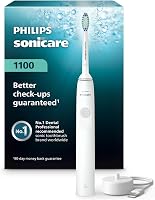
The Sonicare 1100 has a SmarTimer that tells you when you reach 2 minutes and a QuadPacer that prompts you to brush each section of your mouth for 30 seconds. It costs less than the smart Oral-B models and still covers the timer basics.
See our roundup of electric toothbrushes with a timer for more options. The Pro 1000 has a handle-integrated quadrant timer and gum pressure control, both entry-level features that support your brushing technique without smart sensors or an app.
If those two features are your main wants, a budget or mid-range brush is enough. Pay more only when you want extra modes, app feedback, or a longer battery, since the brushing result is much the same.
That makes the timer and pressure sensor the best value features to look for at any price.
How much should you spend on your first electric toothbrush?
Start with a budget or mid-range rechargeable brush and upgrade later if you want more features. A first brush should cover the timer and pressure basics without a big outlay.
The Oral-B Pro 1000 is a sensible first pick. It has three cleaning modes, a 2-minute quadrant timer, and gum pressure control, and it runs on a rechargeable battery with a charge indicator light.
That gives you the core electric brushing experience.
A first brush also teaches you whether you like the round Oral-B head or the sonic brush style. Head shape is a personal fit, and the wrong one can make brushing less comfortable.
Try one style before you spend on a premium handle in that brand. Skip the premium tier on a first buy, because you can't judge whether you want smart sensors and app pairing until you have used a simpler brush for a few months.
Our guide to the best budget electric toothbrushes lists solid first brushes.
Are budget brushes cheaper to own than premium ones?
Yes, once you count heads and the longer life of a simple handle. Budget brushes cost less up front, and their heads are usually cheaper too.
The Sonicare 1100 runs up to 14 days on a full charge, so you charge it less often. Fewer charging cycles can mean less wear on the battery over time.
It ships with one C1 Simply Clean head and a USB charger (power adaptor not included).
Premium brushes cost more to own because their heads cost more. The iO Series 3 includes two heads and a travel case, which offsets some of that at the start.
After that, its replacement heads set the running cost. If you replace heads on schedule and keep the brush clean, a mid-range brush is the value sweet spot.
It has the features that matter, the heads cost less than premium ones, and the handle costs less than a smart model.
Is a cheap electric toothbrush worth it?
Yes, if it has a timer and a pressure sensor, because those two features do the most for your brushing. Price alone doesn't decide how well a brush cleans.
The cheapest brushes sometimes skip the pressure sensor. That sensor matters, because it warns you when you press too hard, which can wear enamel and irritate gums.
The Pro 1000 and the iO Series 3 both have pressure control. The Sonicare 1100 uses gentle sonic cleaning and EasyStart to ease you in over the first 14 uses.
A cheap brush without a timer makes it harder to brush for the full 2 minutes. That is a real reason to spend a little more.
Timer and pressure basics are worth paying for; everything above that is preference. Check what the handle does before you judge a low price.
If it has a 2-minute timer and pressure control, it covers the essentials. If it doesn't, the saving may cost you in brushing quality.
Read is AquaSonic a good electric toothbrush for a look at how budget handles stack up.
What's the smartest way to spend on an electric toothbrush?
Spend on the handle you'll keep and buy heads in multi-packs. A mid-range handle with affordable heads is the best value for most people.
The Oral-B Pro 1000 at 9 out of 10 is our top pick, since it covers the timer, pressure control, and three modes without the premium price.
The Oral-B iO Series 3 at 8.6 suits people who want smart pressure feedback and a travel case. The Sonicare 1100 at 7.9 is a good fit for anyone who prefers gentle sonic cleaning and fewer charges.
Each one changes how much an electric toothbrush costs over time, mostly through heads. Our score weighs specs, features, and how well each brush fits what you're shopping for.
Pick the Pro 1000 if you want the best value overall. Pick the iO Series 3 if smart sensors are worth the extra to you.
Pick the 1100 if sonic cleaning and long battery life matter more than modes.
For more help, see how to choose an electric toothbrush and the best budget electric toothbrushes list.
Frequently asked questions
How much does an electric toothbrush cost in total over a year?
Budget the handle plus about three replacement heads. A budget brush plus heads costs far less than a premium handle plus heads, and the gap widens the longer you keep the brush.
Are electric toothbrush heads expensive to replace?
Yes, heads are the main ongoing cost. Dentists recommend a new head every 3 months, so plan for 3 to 4 heads a year, and factor that into the price you compare.
Do electric toothbrushes cost more to run than manual ones?
The electricity to charge a brush is tiny. The real running cost is replacement heads, which manual brushes don't need, so an electric brush costs more overall.
Why do some electric toothbrushes cost so much more?
Premium brushes add smart sensors, app pairing, more cleaning modes, and longer battery life. Those extras raise the handle price, while the basic brushing action stays much the same.
Can I save money by buying brush heads in bulk?
Yes. Multi-packs often cost less per head than singles, and buying ahead means you replace heads on schedule instead of stretching worn ones.
Store spares somewhere dry.