How to Choose an Electric Toothbrush
To choose an electric toothbrush, start with a comfortable head, a two-minute timer and compatible replacement heads. Add a pressure alert if you press hard, then choose intensity controls, charging and travel features that fit your routine.
On this page (11 sections)
- How should you choose an electric toothbrush?
- Should you pick sonic or oscillating brushing motion?
- Which brush head should you choose?
- Which timers and pressure alerts are worth choosing?
- How many brushing modes do you need?
- How much battery life and charging convenience do you need?
- Which electric toothbrush suits your routine?
- How should you set up and use your new brush?
- How should you care for the handle and heads?
- What mistakes should you avoid before buying?
- How should you choose an electric toothbrush for your needs?
To choose an electric toothbrush, start with a comfortable brush head, a two-minute timer and easy-to-find replacement heads. Put pressure feedback next if you tend to scrub hard, then decide whether adjustable intensity, app guidance or travel accessories solve a real need.
Brushing motion matters, but your technique and willingness to use the brush every day matter too. A handle with more settings can become an awkward buy if you dislike its head or ignore its controls.
For a shortlist to compare alongside this guide, see our best electric toothbrushes for adults.
How should you choose an electric toothbrush?
Choose an electric toothbrush by matching its features to your brushing habits. Start with the problem you want help with, such as rushing, pressing hard or forgetting to cover the inside surfaces.
Write down your main need before comparing handles. This keeps an appealing accessory bundle from distracting you from the feature you'll use twice a day.
| Your main need | Feature to prioritize | What to check |
|---|---|---|
| You finish too quickly | Two-minute timer | Whether the end signal is easy to notice |
| You linger on the front teeth | Pacing prompts | How the intervals divide your mouth |
| You press hard | Pressure feedback | Whether you prefer a pulse, light or change in action |
| Strong vibration feels uncomfortable | Adjustable intensity or gradual introduction | How you select the setting |
| You travel often | Battery runtime and a case | Whether you still need to pack the charger |
| You want fewer controls | A focused feature set | Whether daily brushing requires cycling through settings |
| You want help spotting missed areas | App guidance | Whether you'll use your phone while brushing |
Treat replacement heads as part of the buying decision, rather than something to sort out later. A handle only stays useful if you can keep getting heads that fit it.
Our best budget electric toothbrushes guide can help narrow the options when you want the core brushing features without unnecessary extras.
Should you pick sonic or oscillating brushing motion?
Choose the motion whose head shape and movement you can guide comfortably. Neither design removes the need to move around your mouth with care.
Sonicare brushes use sonic motion, while the Oral-B Pro 1000 combines oscillating, rotating and pulsating action. The Oral-B iO5 combines oscillations with micro-vibrations.
A round head can make a tooth-by-tooth approach easier to picture. With a longer head, pay attention to where the bristles touch so you don't simply slide past the gumline or inner surfaces.
You don't need to recreate a vigorous manual scrubbing motion with either style. Guide the powered head slowly and follow the instructions for its angle and movement.
How to choose an electric toothbrush by motion
When choosing an electric toothbrush by motion, focus on access to your back teeth and control near your gumline. Consider whether the head shape seems manageable in the space available, especially behind your last molars.
Don't assume a stronger sensation means better cleaning. If a brush feels hard to control, a different head shape or lower intensity may be more useful than another mode.
Read our sonic vs oscillating electric toothbrush guide for a closer comparison of the two approaches.
Which brush head should you choose?
Choose a head that fits the exact handle and reaches your teeth comfortably. Brand names alone aren't enough to confirm compatibility, since different ranges can use different attachment systems.
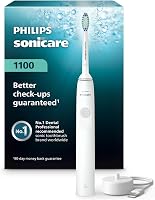
The Sonicare 1100 includes 1 C1 Simply Clean head with soft, flexible bristles. The Sonicare 5950 includes 2 C3 Two-in-one heads with gumline bristles and stiff, dense bristles.
The Oral-B Pro 1000 has compatible head options for gentle cleaning, deep cleaning and whitening. The Oral-B iO5 includes 3 heads and requires Oral-B iO replacement heads.
Before choosing a handle, check how easy it is to find the head type you want. Also compare pack sizes and ongoing replacement costs, especially if several people in your home will use the same brush system.
For help with fit, see which brush heads fit Oral-B and Sonicare handles. Don't force a head onto a handle or keep using one that no longer attaches securely.
If reaching the backs of your teeth is difficult, head size deserves more attention than the number of included spares. A larger bundle doesn't help if the head feels awkward in your mouth.
Which timers and pressure alerts are worth choosing?
Prioritize a two-minute timer and clear pacing prompts, then add pressure feedback if you tend to bear down. These features address separate habits: session length, coverage and brushing force.
A timer tracks elapsed time, but it can't confirm that you've cleaned every surface. Pacing prompts are most useful when you follow a fixed route rather than moving to whichever tooth catches your attention.
The Sonicare 1100, Oral-B Pro 1000 and Oral-B iO5 use 30-second prompts. The Sonicare 5950 prompts every 20 seconds, so follow its area-by-area brushing instructions rather than using a four-part routine.
Which pressure alert will you notice?
Choose pressure feedback that gets your attention while you brush. The Oral-B Pro 1000 stops pulsations when you press too hard, the Sonicare 5950 sends a haptic pulse, and the Oral-B iO5 uses a visual pressure signal.
A pulse may suit someone who looks away from the mirror while brushing. A visual signal may suit someone who wants to check pressure at a glance.
When an alert activates, ease your grip and reduce pressure before moving on. Don't keep pushing until the brush feels forceful again.
If you have ongoing gum discomfort or bleeding, ask your dental professional about brush-head choice and technique. A pressure sensor is a reminder, rather than a solution to every cause of sore gums.
How many brushing modes do you need?
Choose modes and intensity controls you can explain a use for. If you expect to use one setting every day, extra modes shouldn't lead your decision.
Intensity controls change brushing strength, while modes offer different brushing programs. Someone who finds vibration uncomfortable may get more use from lower intensity than from a longer list of named modes.
The Sonicare 1100's EasyStart gradually increases power over its first 14 uses. That suits a gradual introduction, but it serves a different purpose from choosing an intensity level for each session.
The Sonicare 5950 has Clean and Gum Health modes with 3 intensity levels. The Oral-B Pro 1000 offers 3 modes, and the Oral-B iO5 offers 5, including sensitive and whitening settings.
Don't treat a whitening mode as a promise of a particular tooth shade. Choose it only if you want that brushing program, rather than using the name to predict results.
Before buying, check how settings are selected and remembered. A control scheme you understand matters more during a rushed morning than a feature you rarely use.
How much battery life and charging convenience do you need?
Choose a charging setup that fits your bathroom and your usual trips. Battery runtime matters most when you'll be away from a convenient charging point.
Philips gives the Sonicare 1100 up to 14 days of regular brushing per charge, based on 2 two-minute sessions daily on standard mode. It includes a USB charger, but you'll need a separate power adapter.
The Sonicare 5950 offers up to 21 days of regular brushing and includes a travel case. The Oral-B iO5 offers up to 2 weeks and includes a travel case plus a refill head case.
The Oral-B Pro 1000 has an LED indicator that signals when charging is needed. Use that reminder to plan charging before a trip rather than waiting until the handle stops.
Allow a margin around advertised runtime, especially when sharing a handle or using longer sessions. A case protects the brush during packing, but it doesn't automatically mean the case charges it.
Read how to charge an electric toothbrush for setup guidance. Keep the charging arrangement where it can stay dry and follow the instructions supplied with the handle.
Which electric toothbrush suits your routine?
Choose the simplest option that covers your main need. These 4 brushes suit different buyers, from someone learning powered brushing to someone who wants active guidance.
Sonicare 1100: for a gradual introduction
Choose the Sonicare 1100 if you're moving from manual brushing and want help settling into a timed routine. EasyStart gives you a gradual introduction to its brushing power without making app use part of the process.
Skip it if pressure feedback or selectable intensity is central to your decision. The 5950 is the more suitable Sonicare option here for those needs.
Remember to plan for its separate power adapter. That small setup detail matters if you expect everything needed for a wall outlet to arrive in the box.
Oral-B Pro 1000: for round-head brushing with pressure control
Choose the Oral-B Pro 1000 if you want a round head and pressure control without making phone guidance part of your routine. It suits someone who wants reminders built into the handle.
Skip it if you specifically want a visual pressure signal or app-based coverage guidance. Those are stronger reasons to consider the iO5 than simply wanting more modes.
Its change in pulsations needs to be a cue you'll recognize. If you prefer looking for a light, choose around that preference rather than assuming all pressure alerts feel alike.
Sonicare 5950: for adjustable brushing strength
Choose the Sonicare 5950 if you want sonic brushing with control over intensity. Its combination of pressure feedback and adjustable strength suits someone who wants to fine-tune the feel of each session.
Skip it if you want the fewest choices possible and don't expect to adjust strength. The 1100 is a more focused starting point for that buyer.
Its travel case and longer stated runtime also suit trips where you want fewer charging stops. Follow its pacing pattern from the start so the shorter intervals help you cover each area.
Oral-B iO5: for visual feedback and phone guidance
Choose the Oral-B iO5 if you want a visible pressure cue and app guidance to help review your brushing coverage. It makes the most sense when you'll engage with those features rather than ignore them after setup.
Skip it if you want to keep your phone out of the bathroom or only need timing and basic pressure control. Also check the availability of iO heads before committing to that replacement system.
The included heads and cases are useful extras, but your willingness to use the guidance should drive the decision. For a broader comparison, read Oral-B vs Sonicare.
How should you set up and use your new brush?
Set up the brush by checking the charging instructions, fitting the correct head and learning its alerts. Knowing what each signal means keeps you from confusing a pacing prompt with a pressure warning.
Before the first session, read how to start, stop and change settings. Choose a comfortable starting setting, then place the head against your teeth before switching it on to reduce splatter.
Use a light grip and guide the head slowly. Follow a repeatable route across the outer, inner and chewing surfaces, including the backs of the last teeth.
When a pacing signal sounds, move to the next assigned area rather than restarting where you began. Give the inner surfaces deliberate attention, since it's easy to spend too much of the session on visible front teeth.
If you're using app guidance, learn the basic brushing route too. The phone should help you build a routine you can still follow when you leave it elsewhere.
How should you care for the handle and heads?
Keep the brush clean by rinsing away toothpaste and letting the parts air-dry. Follow the model's cleaning instructions, especially around the head connection and charger.
Remove the head as directed to clear residue that can collect beneath it. Let it dry in an open space rather than sealing a wet head in a travel case.
Wipe the handle and keep the charging base free of toothpaste buildup. Don't place the charger under running water or use heat to dry the brush.
Replace heads according to the brand's schedule, and sooner when bristles become worn or splayed. A reminder is useful, but visible wear deserves attention even before it appears.
See how to clean an electric toothbrush for a fuller care routine. Our guide to how often to replace an electric toothbrush head helps you plan ongoing replacements.
What mistakes should you avoid before buying?
Avoid choosing by mode count, bundle size or battery runtime alone. Those details only matter after the head, controls and daily brushing features fit your needs.
- Buying by brand alone: Check the exact head system, especially when moving between Oral-B ranges.
- Paying for ignored guidance: App features add little to your routine if you won't open the app.
- Treating force as cleaning power: More pressure can trigger the very alert designed to help you ease up.
- Following the timer without a route: Two minutes can still leave areas missed if you keep returning to the front teeth.
- Forgetting charging accessories: Confirm adapter needs and what each case actually does.
- Stocking up too early: Make sure the head style and fit suit you before buying a large refill supply.
If timing is your main problem, compare electric toothbrushes with timers. If packing and charging away from home matter most, use our best electric toothbrushes for travel guide.
How should you choose an electric toothbrush for your needs?
Choose an electric toothbrush by settling your biggest daily need first. Pick the Sonicare 1100 for a gradual introduction, or the Oral-B Pro 1000 for round-head brushing with pressure control built into the handle.
Choose the Sonicare 5950 when adjustable intensity matters, or the Oral-B iO5 when you'll use visual pressure feedback and app guidance. Before ordering, confirm the replacement-head system and charging setup.
If 2 options still fit, favor the one whose controls and reminders you'll follow every morning and evening. Use our best electric toothbrushes for adults to compare your final shortlist.
Frequently asked questions
What should I look for when choosing an electric toothbrush?
Choose an electric toothbrush with a comfortable head, a two-minute timer and replacement heads you can find easily. Put a pressure alert next if you press hard, then compare intensity controls, charging needs and travel accessories based on what you'll use each day.
Is a sonic or oscillating toothbrush better?
Neither motion is the best choice for every person; choose a head shape and brushing action you can guide comfortably around your mouth. Sonicare offers sonic motion, while the Oral-B options here use round heads with oscillating action, so compare comfort, pressure feedback and replacement-head needs together.
Do you need a pressure sensor on an electric toothbrush?
Prioritize a pressure sensor if you tend to scrub hard or struggle to judge brushing pressure. Choose feedback you'll notice: the Oral-B Pro 1000 stops pulsations, the Sonicare 5950 gives a pulse, and the Oral-B iO5 uses a visual signal to help you ease up.
How important are electric toothbrush timers?
A two-minute timer is useful for tracking session length, while pacing alerts help you share that time across your mouth. Follow the handle's interval pattern and cover the inner, outer and chewing surfaces, because reaching the timer's end doesn't mean you've reached every tooth.
Should you choose an electric toothbrush by its number of modes?
Choose an electric toothbrush by the settings you'll use, rather than the largest mode count. Adjustable intensity is useful when you want control over brushing strength, while extra modes only earn their place if you understand their purpose and can select them easily each day.