Sonicare 6500 vs 6700: Which Is Better? (November 2026)
For Sonicare 6500 vs 6700, choose the 6500 for its C3 Two-in-one head or the 6700 for its charging travel case and extra gum-care head. Their shared brushing controls make the included accessories the deciding factor.
On this page (10 sections)
- Sonicare 6500 vs 6700: what actually changes?
- Which included brush heads will you actually use?
- What do the shared brushing features mean in daily use?
- Who should buy each set, and who should skip them?
- When does the 6700's charging travel case matter?
- How should you set up and use either brush?
- How do you keep the handle and heads clean?
- Which buying and brushing mistakes should you avoid?
- Sonicare 6500 vs 6700: the final decision
- Sources
Choose the 6500 for its C3 Two-in-one head or the 6700 for charging through its travel case: those are the most useful differences in the Sonicare 6500 vs 6700 decision.
The higher model number doesn't add more brushing modes or stronger stated motion. Your choice should follow the head you want to use each morning and how you plan to charge away from home.

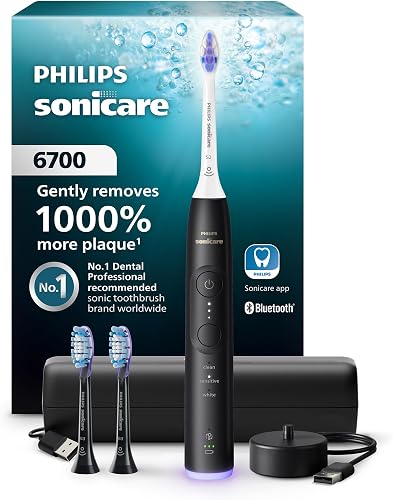
Sonicare 6500 vs 6700: what actually changes?
The included heads and travel case change; the main brushing controls match. Choose the package that solves a need you already have, rather than treating the 6700 as an automatic upgrade.
The 6500 is the more direct choice for someone who wants a whitening-focused head in the box. The 6700 makes more sense for someone who wants travel charging and a spare gum-care head.
Neither package requires you to build an app-based routine to appreciate its basic features. Pressure feedback and timed prompts are useful reasons to consider these handles, but they don't separate the 2 models.
If you mainly want a straightforward electric brush and won't use the extra settings, widen your search before choosing either. Our best Philips Sonicare toothbrushes guide puts these packages alongside other options.
Which included brush heads will you actually use?
Choose the 6500 for the C3 head or the 6700 for the G3 head bundle. Both include an S2 Sensitive head, so having a sensitive option doesn't require choosing the larger package.
The 6500 supplies 1 C3 Two-in-one and 1 S2 Sensitive head. Its C3 has a dense, stiff cluster of bristles at the center, and Philips promotes it for whitening and plaque removal.
The 6700 supplies 1 S2 Sensitive and 2 G3 Premium Gum Care heads. The S2 has more than 3,000 densely packed, long, thin, ultra-soft bristles; the second G3 gives you a spare of the same type.
Think about which head you would fit first. Someone who specifically wants C3 starts with the right accessory in the 6500, while someone who wants to use G3 has a clearer reason to choose the 6700.
More heads don't always mean more useful choice. The 6700 includes 3 heads but only 2 head types, so it offers a spare rather than a third brushing option.
Don't assume the whole household can use one attached head. If people share a handle, each person should have a separate head and a clear way to identify it.
Before buying replacements, check the exact handle and head compatibility in our Sonicare replacement heads guide. Matching a head to your routine matters beyond the first box.
Sonicare 6500 or 6700 for a whitening-focused routine?
The 6500 is the better starting package if the C3 Two-in-one head is your priority. White mode is available on both handles, so that mode alone gives you no reason to favor one.
Keep expectations tied to surface appearance rather than a promised shade change. Brushing isn't a substitute for professional advice about discoloration, and extra pressure isn't a shortcut to whiter teeth.
The C3's firmer center also gives you a reason to pay attention to how the head feels. If you prefer a softer contact, start with the included sensitive option rather than forcing yourself to use a head that feels uncomfortable.
What do the shared brushing features mean in daily use?
Both provide the same range of settings and feedback, so choose your routine before worrying about the model number. Neither has a stated advantage in brushing speed or session timing.
Each offers Clean, Sensitive and White modes with 3 intensity levels per mode. Philips specifies 62,000 bristle movements per minute and Sonicare Fluid Action for both.
Use Clean as an everyday starting point, then adjust if you have a clear reason. A mode name gives you an option, but it doesn't replace careful coverage of every tooth surface.
The visual pressure sensor uses a light ring at the base to alert you when you press too hard. When it lights up, ease your grip and reduce pressure instead of moving faster.
The BrushPacer prompts you every 20 seconds, and the SmartTimer marks 2 minutes. Plan a route through your mouth so those prompts lead you to a new area rather than repeatedly returning to the easiest spots.
Both connect to the Sonicare app for guided brushing, tips and personalized content. Use that guidance if it helps you stay focused, but don't choose the 6700 expecting a different set of app features.
Both also track brushing frequency and pressure for a head replacement reminder. That reminder helps with upkeep, while a visible check of the bristles can catch wear between alerts.
For another model to compare, see our Sonicare 4100 review. Focus on which features you'll act on, especially if extra settings usually go unused.
Who should buy each set, and who should skip them?
Buy the 6500 for a C3-led routine and the 6700 for useful travel charging or G3 spares. Skip either package if its main accessories would stay in a drawer.
Choose the 6500 if you mostly brush at home
The 6500 suits someone who has a regular charging spot and wants to try the C3 alongside a sensitive head. A standard travel case can still serve occasional overnight stays.
It also suits shoppers who prefer buying the head they want from the start. You avoid choosing a larger bundle and then immediately shopping for the missing head.
Skip this set if charging through a case is a firm requirement. Carrying a separate charging setup may become an annoyance if you move between homes or spend long periods away.
Choose the 6700 if your brush often travels
The 6700 suits someone who expects to use its charging case regularly. It also fits a shopper who wants to begin with G3 and keep another ready for replacement.
The extra head has practical value only if that is a head you want to keep using. Don't let the higher count outweigh a preference for the C3.
Skip this set if you mainly brush at home and have no interest in the G3 heads. The higher model number doesn't add a separate tier of brushing controls.
Consider another brush if simplicity is your priority
Neither set needs to be your default choice if you want very few decisions during brushing. Several modes, intensity choices and app guidance are useful only when they fit your habits.
Use our guide to choosing an electric toothbrush to separate essential features from extras. Start with your charging routine, preferred controls and replacement head needs.
When does the 6700's charging travel case matter?
The charging case matters most on longer or frequent trips, especially when you want the case to be part of your charging routine. For occasional short stays, the standard case may be enough.
Philips claims up to 21 days of regular brushing on a full charge for both models. That gives neither a stated battery advantage, and your travel plan should allow some margin rather than rely on reaching the limit.
Both sets include a charging stand, and neither includes a power adapter. Check the supplied charging instructions and arrange a suitable power connection before the first trip.
A charging travel case doesn't mean you can leave all power accessories behind. Confirm how you'll supply power to it, especially if you're moving between countries or rooms with limited outlets.
For a weekend away, charge beforehand and pack the case that came with your brush. For an extended stay, think through where charging will happen and which accessories need to go in your bag.
Don't infer airline packing rules from the type of case. Our guide to taking an electric toothbrush on a plane covers that separate part of travel planning.
For everyday setup, our electric toothbrush charging guide explains common charging arrangements. Follow the instructions supplied with your exact brush for its power requirements.
How should you set up and use either brush?
Start with comfortable pressure, a manageable intensity and a consistent route through your mouth. Learn one setting first so you can tell whether a later adjustment helps.
Before the first session, follow the supplied charging and assembly instructions. Fit the head securely, choose your starting mode and familiarize yourself with the controls before putting toothpaste on the bristles.
If you're unsure where to start, use the sensitive head and a lower intensity. Increase only if the session remains comfortable; reaching the strongest setting isn't a goal.
Place the bristles against your teeth before switching on to reduce splatter. Guide the head slowly along the teeth and gumline rather than adding the vigorous scrubbing motion you might use with a manual brush.
Cover outer, inner and chewing surfaces. Spend deliberate time behind the front teeth and around the back teeth, where an easy-to-repeat routine can help prevent missed areas.
Use each pacing prompt as a cue to move on. If you lose track, return to a fixed starting point next session instead of rushing randomly around your mouth.
When the pressure light appears, relax your fingers and let the bristles stay in light contact. Holding the handle tightly can make it harder to notice how much force you're applying.
Try the app when you have time to follow its guidance. Keep the setting steady for a few sessions so you aren't changing the head, mode and intensity all at once.
How do you keep the handle and heads clean?
Rinse after use and let the parts dry so toothpaste doesn't build up around the head connection. Keep the charging area clean and dry, following the care instructions for each accessory.
After brushing, rinse the bristles thoroughly and remove the head as directed to clean residue around the connection. Wipe the handle rather than letting dried toothpaste collect at the base.
Let the brush air-dry before closing it inside the travel case when practical. A damp brush packed tightly after every session needs more attention than one stored openly at home.
Keep unused spare heads dry and separate from the head in use. With the 6700, save the second G3 until you need it rather than rotating it into use without a reason.
Replace a head when its bristles become worn or splayed, and follow the replacement guidance supplied with the brush. Don't keep using a worn head simply because a reminder hasn't appeared.
Our electric toothbrush cleaning guide covers routine care in more detail. Regular cleaning also makes it easier to spot residue around the parts that need attention.
Which buying and brushing mistakes should you avoid?
Avoid paying for accessories you won't use and trying to compensate for missed areas with harder brushing. Those choices matter more here than the difference between the model numbers.
Don't choose the 6700 solely because its number is higher. You gain a different head bundle and travel charging, which should match a specific need.
Don't count spare heads as permanent savings without considering future replacements. Once the included heads wear out, you'll still need a compatible type you're happy to keep buying.
Don't switch to White mode and increase pressure because you want faster visible results. Follow a consistent routine and let the pressure feedback guide you toward a lighter touch.
Don't use the timer as proof that every surface received attention. Two minutes spent mainly on the front teeth leaves the rest of your mouth short of care.
Don't treat a gum-care name as treatment for a dental problem. If tenderness, bleeding or sensitivity persists, ask a dental professional about your technique and head choice.
Sonicare 6500 vs 6700: the final decision
Choose the 6500 if you want C3 from the start; choose the 6700 if you'll use the charging case or G3 spare. For Sonicare 6500 vs 6700, that is the clearest decision rule.
Before ordering, picture the first head you'll attach and the next trip you'll take. Those 2 details should make the right package clearer than counting shared features.
If neither package fits your routine, step back to a broader brush comparison. Our Oral-B vs Sonicare guide helps with the next decision if you're still choosing between brush styles.
Sources
The Philips feature and accessory descriptions support this comparison of the 2 packages. Whitening statements and battery-life estimates are Philips claims.
- Sonicare 6500: See it on Amazon
- Sonicare 6700: See it on Amazon
- Philips Sonicare replacement heads guide
Frequently asked questions
What is the difference between Sonicare 6500 and 6700?
The main differences are the supplied heads and travel case: the 6500 includes C3 Two-in-one and S2 Sensitive heads with a standard case; the 6700 includes an S2 Sensitive head, 2 G3 Premium Gum Care heads and a charging case. Choose around those accessories, since their brushing controls match.
Do the Sonicare 6500 and 6700 have the same modes?
Yes, both have Clean, Sensitive and White modes, each with 3 intensity levels; you can adjust the mode and strength separately rather than moving straight to the strongest setting. Both also provide visual pressure feedback, timed brushing prompts and app guidance, so the 6700 adds no extra brushing modes.
Which Sonicare toothbrush is better for travel?
The Sonicare 6700 is the better fit when you want to charge through the included travel case; for a short trip on a full charge, the 6500's standard case may cover your needs. Philips claims up to 21 days of regular brushing per charge for either model.
Are the Sonicare 6500 and 6700 compatible with replacement heads?
Both use replaceable heads, but confirm that any replacement pack fits your exact handle before ordering. Start with the included head you prefer, then use that choice to plan future replacements; our Sonicare replacement head guide explains the checks to make rather than relying on a similar-looking package.
How long does the battery last on the Sonicare 6500 and 6700?
Philips claims up to 21 days of regular brushing on a full charge for both models; that figure is a planning guide, not a fixed charging date for every routine. Charge before longer trips and follow the supplied instructions for the stand, charging case and required power connection.


