7 Best Philips Sonicare Toothbrushes (November 2026)
The best Philips Sonicare toothbrushes include the Sonicare 5950 for daily gum care, the Sonicare 4100 for first electric brushes, and the Sonicare 5900 for home brushing routines.
On this page (9 sections)
- How we chose the best Sonicare toothbrushes
- Compare the best Philips Sonicare toothbrushes
- The best Sonicare toothbrushes for different routines
- Which Sonicare features matter most?
- How do you choose the right Sonicare bundle?
- How should you set up and use a Sonicare toothbrush?
- How do you care for a Sonicare between uses?
- Which Sonicare buying mistakes should you avoid?
- Choose the best Sonicare toothbrush for the routine you'll keep
The best Sonicare toothbrush for most people is the Sonicare 5950, thanks to its adjustable brushing, pressure feedback and travel case. Choose the 4100 for a simple first electric brush, or the 6700 if app guidance and charging through a travel case fit your routine.
Start with how you brush and where you'll keep the charger. Extra modes help only when you'll use them, while the right head, clear pressure feedback and a repeatable routine matter every day.
Our picks at a glance
-
1

-
2

-
3

How we chose the best Sonicare toothbrushes
The 5950 offers the strongest overall balance of daily controls, included heads and travel accessories. BrighterRoom compared the features and bundles, giving priority to useful brushing guidance over the number of settings alone.
The order reflects overall fit for this roundup, so a lower-ranked model can still be the better choice for a specific buyer. For example, frequent travelers may value the 6700's charging case more than someone who keeps a brush beside the bathroom sink.
Compare the best Philips Sonicare toothbrushes
Compare head types, brushing controls and the charging setup before choosing a bundle. Battery life helps with travel planning, but the included accessories often make the clearer difference between closely matched models.
| Product | Best for | Modes | Brush heads | Battery | Our score |
|---|---|---|---|---|---|
| Sonicare 5950 | daily gum care | Clean and Gum Health | 2 C3 Two-in-one heads | Up to 21 days | 8.8 |
| Sonicare 4100 | first electric brushes | Daily brushing with EasyStart | 1 C2 Optimal Plaque head | Up to 14 days | 8.4 |
| Sonicare 5900 | home brushing routines | Clean and Gum Health | 2 C3 Two-in-one heads | Up to 21 days | 8.1 |
| Sonicare 5300 | alternating brushing priorities | Clean, White and Gum Care | 1 G2 and 2 DiamondClean | Up to 2 weeks | 8.0 |
| Sonicare 6500 | app-guided daily brushing | Clean, Sensitive and White | 1 C3 and 1 S2 | Up to 21 days | 7.7 |
| Sonicare 4200 | beginners who travel | Brushing with 3 intensity levels | 1 W DiamondClean head | Up to 14 days | 7.6 |
| Sonicare 6700 | frequent overnight trips | Clean, Sensitive and White | 1 S2 and 2 G3 heads | Up to 21 days | 7.5 |
The best Sonicare toothbrushes for different routines
Choose the 5950 for a balanced daily setup, then consider the other models for a simpler start, different heads or connected guidance. Each recommendation below explains who benefits from the bundle and who should choose something else.
Sonicare 5950: Best for daily gum care
- 2 C3 Two-in-one brush heads
- Clean and Gum Health modes
- 3 intensity levels
- Up to 21 days per charge
Choose the 5950 for adjustable daily brushing and a travel case without app-based guidance. Its two matching C3 heads let you keep a spare of the same type.
Pros
- Pressure feedback helps you ease off
- Separate mode and intensity choices
- Travel case and spare C3 head included
Cons
- No brush-head variety in the set
- Extra settings may go unused in a basic routine
The Sonicare 5950 suits someone who wants control over brushing strength without involving a phone. Clean and Gum Health modes pair with three intensity levels, so you can change the feel without switching handles.
Its pressure sensor gives a gentle pulse when you push too hard. That physical cue suits a routine where you'd rather feel a warning than watch for one.
BrushPacer prompts you every 20 seconds, and SmartTimer marks a two-minute session. Divide your mouth into six areas before starting so the prompts lead to planned moves rather than hurried guesses.
The bundle includes two matching C3 Two-in-one heads and a travel case, with Philips stating up to 21 days of regular brushing per charge. The second head works as a ready spare if this is your preferred type.
Skip it if you want different head types in the box or know you'll never change the settings. Our Sonicare replacement-head guide can help you choose a head before committing to a bundle.
Sonicare 4100: Best for first electric brushes
- C2 Optimal Plaque brush head
- Pressure sensor
- EasyStart
- Up to 14 days per charge
The 4100 suits beginners who want help with pressure and timing. EasyStart introduces the brushing power gradually, and the USB charger needs a separate power adapter.
Pros
- EasyStart eases the switch from manual
- Pressure feedback and section prompts
- Brush-head replacement reminder
Cons
- One brush head included
- Power adapter not included
The Sonicare 4100 is the clearest choice for a first electric brush with a simple routine. EasyStart increases power gradually over the first 14 uses, giving you time to adjust to the sensation.
The pressure sensor pulses when you press too hard, while QuadPacer divides brushing into 30-second sections. Use those prompts to move through four planned areas instead of spending most of the session on your front teeth.
It includes one C2 Optimal Plaque head and a USB charger without a power adapter. Philips states up to 14 days of regular brushing per full charge.
Choose it if your main goal is to stop rushing or scrubbing and build a steady habit. You don't need an app to follow a timer or respond to pressure feedback.
Skip it if selectable intensity or an included travel case is central to your choice; the 4200 is the more relevant comparison. Our Philips Sonicare 4100 review explains its features in more detail.
Sonicare 5900: Best for home brushing routines
- 2 C3 Two-in-one brush heads
- Clean and Gum Health modes
- 3 intensity levels
- Up to 21 days per charge
The 5900 suits a home routine built around adjustable brushing and matching replacement heads. It includes a USB-A charging stand without a power adapter.
Pros
- Spare C3 head included
- Haptic pressure feedback
- Mode and intensity can be adjusted
Cons
- Power adapter not included
- No brush-head variety in the set
The Sonicare 5900 suits buyers who want adjustable brushing for a mainly home-based routine. It shares the 5950's Clean and Gum Health modes, three intensity levels and two matching C3 heads.
Its haptic pressure warning gives a direct cue to lighten your grip. The 20-second BrushPacer and two-minute timer provide structure without app guidance.
A USB-A charging stand is included, but you'll need a separate power adapter. Philips states up to 21 days of regular use per charge, which gives you flexibility if the charger stays in another room.
Choose the 5900 when the brushing controls matter more than the 5950's included case. If you already have suitable travel storage, that accessory may add little to your routine.
Skip it if you want an included travel case or a softer head option in the bundle. Read the Sonicare 5950 review to compare the alternative, but don't assume the higher model number means a different cleaning result.
Sonicare 5300: Best for alternating brushing priorities

- 3 brush heads included
- Clean, White and Gum Care modes
- Pressure sensor
- Travel case
The 5300 suits buyers who want to alternate between gum-focused brushing and surface-stain care. Its bundle includes two head types, a travel case and a charger.
Pros
- Gum-care and stain-focused heads included
- 3 modes and 3 intensity settings
- Travel case included
Cons
- Shorter stated battery life than the 21-day models
- Only one included head is the G2 type
The Sonicare 5300 is the most useful bundle here for alternating between gum-focused brushing and surface-stain care. It includes one G2 Optimal Gum Care head and two DiamondClean heads, giving you two head types from the start.
Clean, White and Gum Care modes pair with three intensity settings. Philips describes Gum Care as adding an extra minute of reduced-power brushing, so allow more time when choosing that routine.
A pressure sensor and QuadPacer support daily technique. The travel case and charger are included, and Philips states up to two weeks of use per charge.
Buy this model if you have a clear reason to use both head types. Keep track of when each head enters use, since alternating heads can make replacement dates harder to remember.
Skip it if you want app guidance or the longer stated battery allowance of the 21-day models. Our guide to replacing a Sonicare brush head explains how to change heads without forcing the connection.
Sonicare 6500: Best for app-guided daily brushing

- Clean, Sensitive and White modes
- 3 intensity levels
- App guidance
- Up to 21 days per charge
Choose the 6500 if you'll use app guidance and want to begin with both C3 and S2 Sensitive heads. Its pressure warning uses a light ring at the handle's base.
Pros
- App offers guided brushing and tips
- Two different brush-head types
- Sensitive mode and adjustable intensity
Cons
- Power adapter not included
- Included travel case does not provide case charging
The Sonicare 6500 suits someone who will use phone-based guidance as part of a brushing habit. Its app provides guided brushing, tips and personalized content, which gives the connection a purpose beyond adding another device to your phone.
Clean, Sensitive and White modes each have three intensity levels. The included C3 Two-in-one and S2 Sensitive heads let you begin with two different options rather than a matching spare.
A light ring at the base warns about excess pressure. Consider whether you'll notice a visual cue while brushing, especially if you tend to look away from the mirror.
The set includes a travel case and charging stand without a power adapter. Philips states up to 21 days of regular brushing per charge.
Skip it if you prefer to keep your phone out of the bathroom or specifically want case charging. The Sonicare 6500 vs 6700 comparison helps separate their brush-head bundles and travel accessories.
Sonicare 4200: Best for beginners who travel

- W DiamondClean brush head
- 3 intensity levels
- Travel case
- Up to 14 days per charge
The 4200 combines a gradual introduction to electric brushing with selectable intensity and a travel case. It suits beginners who want control over brushing strength.
Pros
- EasyStart gradually increases power
- High, Medium and Low intensity options
- Travel case included
Cons
- One brush head included
- Power adapter not included
The Sonicare 4200 is a strong fit for beginners who want intensity control and travel storage. Its High, Medium and Low settings let you choose the brushing strength, while EasyStart raises power gradually across the first 14 uses.
Those controls serve different purposes: EasyStart helps with the early transition, while selectable intensity lets you keep a preferred level later. Choose a comfortable setting rather than assuming the strongest option should be your goal.
The pressure sensor signals through gentle vibrations, and QuadPacer provides 30-second prompts within a two-minute session. One W DiamondClean head, a travel case and a charger are included, but the power adapter is separate.
Philips states up to 14 days of regular brushing per charge. Charge before a trip and leave some margin rather than planning around the full stated allowance.
Skip it if you want several head types or app guidance. Before flying, read our guide to taking an electric toothbrush on a plane for packing advice.
Sonicare 6700: Best for frequent overnight trips
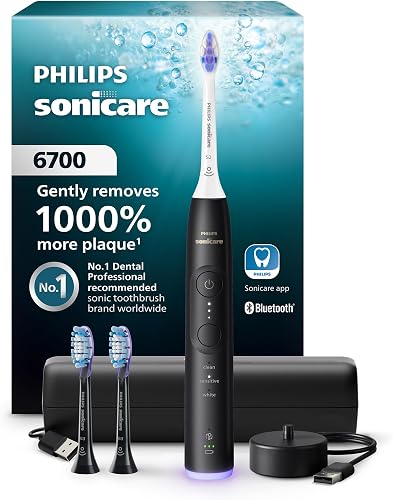
- App guidance
- Clean, Sensitive and White modes
- 3 brush heads included
- Charging travel case
The 6700 suits frequent travelers who want case charging, app guidance and gum-focused head choices. It includes an S2 Sensitive head and two G3 Premium Gum Care heads.
Pros
- Charging travel case and separate stand
- Three heads across two types
- Visual pressure warning and app guidance
Cons
- Power adapter not included
- Case charging adds little if you brush mainly at home
The Sonicare 6700 makes the most sense for frequent travelers who want to charge through the case. That accessory is the clearest reason to choose it over an app-connected model with a regular travel case.
Its bundle includes one S2 Sensitive head and two G3 Premium Gum Care heads. This mix suits someone who wants a sensitive-head option alongside gum-focused replacements rather than a stain-focused starter set.
Clean, Sensitive and White modes each offer three intensity levels. App guidance, a visual pressure warning and timed prompts give you several ways to structure the routine.
Philips states up to 21 days of brushing per charge. Both a charging travel case and a separate charging stand are included, but a power adapter is not.
Skip it if the brush will stay at home and you won't use the app. The 6500 vs 6700 comparison helps you decide whether the case and different heads justify choosing this bundle for your needs.
Which Sonicare features matter most?
Prioritize a comfortable head, pressure feedback and clear pacing before extra modes. These features affect how you handle the brush during every session, while accessories mainly affect convenience.
How to choose the best Sonicare toothbrush for your habits
Match the brush to the part of your routine that needs help. If you rush, focus on pacing; if you press hard, choose a pressure cue you'll notice and act on.
If vibration puts you off electric brushing, gradual-start features or selectable intensity deserve priority. Buying more settings won't help if the brush feels so uncomfortable that you avoid using it.
For a broader checklist covering handle choice and daily habits, see how to choose an electric toothbrush.
Mode and intensity are different controls
Mode changes the brushing program; intensity changes its strength. A mode may alter the pattern or length of a session, so several mode-and-intensity combinations don't represent entirely different cleaning systems.
Start with an everyday program you can repeat comfortably. Add another mode only when you understand its purpose, rather than cycling through every option during each session.
White modes and stain-focused heads concern surface stains. Don't choose them expecting a change to the natural color of your teeth or to dental restorations.
Choose a warning you can notice
A pressure warning helps only when you respond to it. Lighten your grip as soon as the handle alerts you, keeping the bristles in contact rather than lifting the brush completely away.
Physical feedback may suit someone who looks away while brushing. A visual warning suits someone who watches the handle or mirror and prefers a visible reminder.
A sensor isn't a reason to press until the warning starts. Begin with light contact and let the moving bristles do the work.
Treat app guidance as a habit choice
Buy connected guidance if you'll regularly use it. It can suit someone who likes prompts and structured routines, but pairing a brush with a phone is another step to maintain.
If you already follow section prompts reliably, the app may add little to your day. Put more weight on head comfort and travel needs than a connected feature you expect to ignore.
How do you choose the right Sonicare bundle?
Choose the head mix and travel accessories you'll actually use, then check the charging requirements. A larger bundle is useful only when its contents match your routine.
Matching spares or different heads?
Matching heads suit someone who already knows their preferred type and wants a replacement ready. Different head types make more sense when you're choosing between gum-focused, sensitive or surface-stain brushing.
Don't judge a head only by how strongly it scrubs. You should be able to guide it around the back teeth and along the gumline without forcing it into place.
An extra head doesn't make a handle suitable for brushing two mouths at once. If household members share a handle, each person needs a clearly identified personal head.
Regular travel case or charging case?
A regular case protects the brush in your bag; a charging case adds another charging location. Frequent overnight stays make case charging more useful than an occasional short trip.
A charging case still needs a suitable power source. Check the required cable and adapter before packing, and don't assume the case stores a separate reserve of power.
Stated battery allowances are planning guides, not a promise for every routine. Leave room for different settings, longer sessions and a battery that wasn't fully charged before departure.
Check the power source before the brush arrives
Make sure you have a suitable adapter where one isn't included. The 4100, 5900, 6500, 4200 and 6700 bundles require a separate power adapter.
Use charging equipment that matches the handle's instructions rather than assuming an old stand fits. Our guide to how to charge an electric toothbrush covers placement, connections and a sensible first charge.
How should you set up and use a Sonicare toothbrush?
Start with a charged handle, a securely fitted head and a gentle setting where you can select one. Plan your route around the mouth before the timer starts.
Read the handle's instructions for attaching the head, charging and changing controls. Don't force the head flush against the handle if the design leaves a small gap.
Put toothpaste on the head and position it in your mouth before switching on. This reduces splashes and lets you begin with the bristles where they need to be.
Follow a route instead of chasing the timer
Cover the outer, inner and chewing surfaces in a fixed order. A timer tracks elapsed time, so you still need a plan that reaches the back teeth and the tongue-facing surfaces.
For 30-second prompts, divide the mouth into four sections. For 20-second prompts, use six areas and share each area's time across its tooth surfaces.
Move slowly from tooth to tooth instead of scrubbing back and forth as you might with a manual brush. Keep light contact near the gumline without pushing the head into the gums.
Give the inside surfaces of the front teeth deliberate attention. They're easy to miss when most of the session goes toward the broad outer surfaces.
Adjust comfort before adding features
Change one control at a time so you can tell what helps. Keep the same head and mode while trying a different intensity, rather than changing everything at once.
A stronger sensation isn't a target, and a named gum mode isn't a treatment for a gum problem. If soreness, bleeding or sensitivity persists, ask a dental professional for advice.
Brushing also doesn't replace cleaning between your teeth. Keep that part of your routine separate rather than expecting fluid movement from the brush to do every job.
How do you care for a Sonicare between uses?
Rinse away toothpaste and let the head and handle air-dry before storing them. A clean connection and dry travel storage help prevent residue from building up around the head.
Remove the head as directed to rinse the head base and handle shaft, then wipe the handle. Follow the manufacturer's cleaning instructions and avoid soaking charging equipment.
Leave the brush somewhere it can dry rather than closing a wet head inside its travel case. Clean the case when residue appears, and dry it before repacking.
Inspect the bristles regularly instead of relying only on a replacement reminder. Worn or splayed bristles can need attention before the usual replacement date.
Keep track of each head separately if you alternate types. Our guide to cleaning an electric toothbrush explains how to deal with the handle, head and charging area.
Which Sonicare buying mistakes should you avoid?
Avoid buying around a model number, a motor figure or unused extras. Choose the features that make your own routine easier to follow.
A higher number doesn't automatically identify the right brush for you. Two models with similar brushing controls can differ mainly in included heads or travel accessories.
Don't use bristle-movement figures as a complete ranking of cleaning quality. Coverage, light pressure and a head you can place comfortably are practical parts of the decision.
Don't buy a large head bundle before deciding whether you want that head type. A spare is useful when it matches your preference; otherwise, it may sit unused.
Finally, don't respond to missed areas by pressing harder or repeatedly restarting the timer. Slow down, follow a route and use the prompts to share your brushing time more evenly.
Choose the best Sonicare toothbrush for the routine you'll keep
Pick the 5950 if you want adjustable daily brushing and convenient travel storage. Choose the 4100 for a simple first electric brush, or the 4200 when selectable intensity and an included case are priorities.
Choose the 5900 for a mainly home-based setup with matching spare heads. The 5300 makes more sense when you want to alternate head types for gum-focused brushing and surface-stain care.
For connected guidance, choose the 6500 if a regular travel case is enough. Choose the 6700 when you'll make regular use of case charging and prefer its gum-focused head bundle.
The best Sonicare toothbrush is the one whose controls and accessories support your daily habit. If the brand choice is still open, use our best electric toothbrushes for adults roundup to widen the comparison.
If handle style and brushing motion are your remaining questions, read Oral-B vs Sonicare before choosing a brand.
Our top 3 picks at a glance
-
1
-
2
-
3
Frequently asked questions
Which Philips Sonicare toothbrush is best for most people?
The Sonicare 5950 is the best choice for most people who want adjustable brushing without app guidance. Its pressure feedback, pacing prompts and travel case cover a practical daily routine.
Choose the 4100 if you prefer a simpler start, or the 6700 if charging through a travel case matters.
What is the difference between the Sonicare 5950 and 5900?
The clearest buying difference is the 5950's included travel case. Both models offer two C3 heads, Clean and Gum Health modes, three intensity levels and haptic pressure feedback.
The 5900 includes a USB-A charging stand without a power adapter, making its charging setup worth checking before you choose.
Is the Sonicare 4100 a good choice for a first electric toothbrush?
Yes, the Sonicare 4100 is a good first electric brush if you want a gradual introduction and clear prompts. EasyStart increases power over the first 14 uses, while pressure feedback helps you ease off.
Its pacing and session timer support a repeatable routine without requiring app guidance.
Which Sonicare toothbrush includes a travel case?
The Sonicare 5950, 5300, 6500 and 4200 include travel cases, while the 6700 includes a charging travel case. Choose according to whether you need protection in your bag or charging through the case.
A charging case still needs a suitable power source; it isn't a promise of charging without an outlet.
How often should I replace a Sonicare brush head?
Plan to replace a Sonicare brush head about every three months, or sooner if its bristles become worn or splayed. Use the handle's reminder where available, but also inspect the head yourself.
Our guide to when to replace an electric toothbrush head explains the signs to watch for.


