6 Best Electric Toothbrushes for Travel (November 2026)
The best electric toothbrushes for travel include the Sonicare 1100 for short vacations, the 7AM2M Sonic Type-C for extended trips, and the Sonicare 2100 for first-time sonic users.
On this page (10 sections)
- How we chose the best electric toothbrush for travel
- Compare travel toothbrush charging and battery life
- Which electric toothbrush for travel fits your trip?
- How to choose a travel toothbrush by trip length
- Which charging style works best on the road?
- How should you set up a new travel toothbrush?
- How many brush heads should you pack?
- How do you keep a travel toothbrush clean between stops?
- Which travel toothbrush mistakes are easiest to avoid?
- Which best electric toothbrush for travel should you choose?
The best electric toothbrush for travel is the Sonicare 1100 for most people, with useful brushing reminders and a charging setup suited to short vacations. Choose the 7AM2M Sonic Type-C for longer gaps between charges, or an AA-powered Oral-B if you prefer to replace batteries.
Start with the trip you actually take. A weekend with access to outlets calls for a different power plan than a month moving between places with limited charging access.
The brush also needs to work well in your daily routine. Familiar controls, a head you like and a way to protect wet bristles matter more than collecting extra modes.
Our picks at a glance
-
1

-
2

-
3

- 4
 Check it
Oral-B Pro 100 3D White Battery
Best for charger-free packing - 5
 Check it
Oral-B Pro 100 CrossAction Battery
Best for CrossAction users - 6
 Best for traveling couplesCheck it
How we chose the best electric toothbrush for travel
We favored manageable power needs and useful brushing reminders, then considered the included heads and number of handles. BrighterRoom compared the features and manufacturer battery estimates to match each brush to a travel situation.
A rechargeable brush earns its place by fitting your charging routine. An AA-powered brush offers a different benefit: you can restore power by replacing batteries without finding an outlet.
Battery estimates help plan a trip, but they aren't directly comparable across brands with different stated conditions. We use them to guide charging plans, rather than rank cleaning ability.
We also kept similar models in perspective. The two Sonicare brushes share their main travel features, while the two Oral-B versions mainly give you a choice of included head.
If you already like your home brush, check head compatibility before buying a second handle. Our guides to changing an Oral-B brush head and replacing a Sonicare brush head explain how those systems work.
Compare travel toothbrush charging and battery life
Choose rechargeable power for planned charging or replaceable batteries for trips where you prefer to avoid a charger. The table shows the connections and battery estimates that affect what goes in your bag.
| Product | Best for | Power | Charging | Battery life | Our score |
|---|---|---|---|---|---|
| Sonicare 1100 | short vacations | Rechargeable | USB charger included; power adaptor not included | Philips claims up to 14 days of regular brushing | 7.9 |
| 7AM2M Sonic Type-C | extended trips | Rechargeable | USB Type-C | 7AM2M claims up to 120 days, depending on use | 7.5 |
| Sonicare 2100 | first-time sonic users | Rechargeable | USB charger included; power adaptor not included | Philips claims up to 14 days of regular brushing | 7.1 |
| Oral-B Pro 100 3D White Battery | charger-free packing | 2 AA batteries | Uses replaceable AA batteries | 7.0 | |
| Oral-B Pro 100 CrossAction Battery | CrossAction users | 2 AA batteries | Uses replaceable AA batteries | 6.9 | |
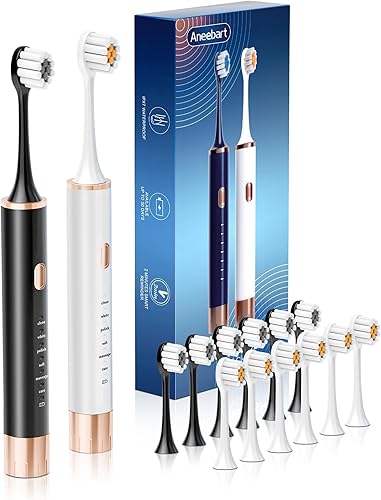
| Aneebart Sonic 2-Pack | traveling couples | Rechargeable | Built-in USB charging port | Aneebart claims 30+ days after a full charge | 6.8 |
Read the charging column as a packing requirement. A USB charger, a Type-C connection and a built-in USB port each need a suitable source of power, even though they connect in different ways.
The number of heads affects what you have available at home or during a long stay. It doesn't mean you need to pack the whole set for every trip.
Which electric toothbrush for travel fits your trip?
The Sonicare 1100 is the default choice for short vacations, while the other picks suit longer stays, replaceable battery power or two travelers. Choose by the inconvenience you most want to avoid: finding power, carrying a charger or managing separate brushes.
Sonicare 1100: best electric toothbrush for travel on short breaks
Sonicare 1100: Best for short vacations
- Up to 14 days per charge, according to Philips
- USB charger included
- SmarTimer and QuadPacer
- One C1 Simply Clean brush head
A straightforward choice for short vacations, with brushing reminders and a USB charger. EasyStart gradually introduces the brushing power over the first 14 uses.
Pros
- Two-minute timer with section reminders
- EasyStart eases the move to sonic brushing
- USB charger included
Cons
- Power adaptor not included
- Only one brush head included
The Sonicare 1100 suits travelers who want a simple rechargeable brush for weekends and short vacations. Philips claims up to 14 days of regular brushing, based on two two-minute sessions each day on standard mode.
SmarTimer marks the two-minute session, and QuadPacer divides it into 30-second sections. Those prompts help keep an early departure or late hotel arrival from turning into a rushed brush.
EasyStart increases the power gradually over the first 14 uses. Begin using it before departure if sonic brushing is new to you, so your first morning away isn't also your first encounter with the sensation.
The set includes a C1 Simply Clean head and a USB charger, but no power adaptor. Plan a compatible power source if your trip needs a recharge.
Choose it for a straightforward routine rather than a large set of modes or spare heads. Skip it if direct Type-C charging or replaceable batteries would make your travel kit easier to manage.
For a brush that will spend most of its time at home, compare the best electric toothbrushes for adults before choosing solely around travel.
7AM2M Sonic Type-C: for longer gaps between charges
7AM2M Sonic Type-C: Best for extended trips
- USB Type-C charging
- Up to 120 days per charge, according to 7AM2M
- Six replacement heads included
- Five modes with timed brushing reminders
The strongest fit for travelers who want long gaps between charges and already carry Type-C equipment. The included head supply is useful for extended stays.
Pros
- USB Type-C charging
- Long claimed time between charges
- Six replacement heads included
Cons
- Battery life varies with usage
- Five modes add choices for people who want a basic routine
The 7AM2M Sonic Type-C is the stronger fit for extended travel when you want fewer charging stops. 7AM2M claims up to 120 days per charge, depending on usage, and the handle uses USB Type-C charging.
That connection is useful if Type-C already forms part of your travel kit. Check your intended cable and power source before leaving rather than assuming every cable in your bag will suit the brush.
The set includes six replacement heads with soft, W-shaped bristles and fading blue indicators. Keep most of them at home, taking an extra only when it serves your trip.
Five modes cover Clean, White, Polish, Milder and Sensitive, alongside a two-minute timer and 30-second prompts. Start with a comfortable daily setting rather than changing modes throughout each session.
Choose this brush for its power plan and head supply. Skip it if you want the simplest possible controls, or if a short trip gives you no reason to prioritize its longer claimed run time.
A long battery estimate is permission to charge less often, not a reason to leave home with an unknown charge level.
Sonicare 2100: for getting used to sonic brushing
Sonicare 2100: Best for first-time sonic users
- Up to 14 days per charge, according to Philips
- USB charger included
- EasyStart power ramp
- SmarTimer and QuadPacer
EasyStart and timed reminders suit travelers moving from a manual brush to a sonic handle. Its travel equipment closely matches the Sonicare 1100.
Pros
- Gradual power increase for new users
- Two-minute timer with section reminders
- One C1 Simply Clean head included
Cons
- Power adaptor not included
- No clear travel-feature advantage over the Sonicare 1100
The Sonicare 2100 suits someone moving from a manual brush who wants a gradual introduction to sonic brushing. EasyStart builds power over the first 14 uses, while SmarTimer and QuadPacer guide session length and mouth sections.
Its C1 Simply Clean head has soft, flexible bristles. Let the powered head do the work rather than scrubbing harder because the brush feels different from a manual one.
For travel, its equipment closely matches the 1100: Philips gives the same two-week battery estimate, and a USB charger is included without a power adaptor. There is no clear travel-feature reason here to move up from the first pick.
Choose the 2100 if you specifically want this model and its guided routine fits you. Skip it if you already have the 1100 and are seeking a different charging connection or more time between charges.
Make the change before your travel week if possible. Learning the feel and controls at home leaves fewer details to sort out in an unfamiliar bathroom.
Oral-B Pro 100 3D White Battery: for leaving the charger behind
Oral-B Pro 100 3D White Battery: Best for charger-free packing
- Replaceable AA battery power
- Two AA batteries included
- Precision Clean brush head
- Accepts several Oral-B head types
Choose this version to leave a toothbrush charger at home and start with a Precision Clean head. Replacement batteries take the place of charging stops.
Pros
- Two AA batteries included
- No toothbrush charger needed
- Several compatible replacement head choices
Cons
- Needs replacement batteries
- Battery changes require planning on longer trips
The Oral-B Pro 100 3D White Battery suits travelers who would rather carry replacement batteries than a charging setup. It runs on two included AA batteries and comes with a Precision Clean head.
The head name matters here: despite the handle's 3D White name, Precision Clean is the included option. Choose it because you want that head and power arrangement, rather than expecting a different head from the name alone.
The handle also accepts CrossAction, Sensitive, Gum Care, FlossAction and 3D White heads. That gives you room to keep using a compatible head style you already prefer.
Buy it for trips where avoiding a charging cable solves a real packing problem. Skip it if keeping track of replacement batteries sounds more troublesome than charging a handle.
No battery run-time estimate is supplied for this model, so don't build a long trip around a guessed replacement date. Plan access to suitable spares, and use a separate timer if you need help keeping sessions consistent.
Oral-B Pro 100 CrossAction Battery: for keeping a preferred head
Oral-B Pro 100 CrossAction Battery: Best for CrossAction users
- Replaceable AA battery power
- Two AA batteries included
- Round CrossAction brush head
- Accepts several Oral-B head types
A direct choice for travelers who want a CrossAction head with replaceable battery power. It avoids adding a toothbrush charger to your bag.
Pros
- CrossAction head included
- Two AA batteries included
- No charging stop required
Cons
- Needs replacement batteries
- Offers little reason to switch if you prefer Precision Clean
The Oral-B Pro 100 CrossAction Battery is the direct choice if you want replaceable battery power with a round CrossAction head. Its angled bristles suit a tooth-by-tooth brushing approach.
The power arrangement matches the other Pro 100 here, with two AA batteries included. Choose between these versions primarily by the head you want to start with, rather than expecting a different travel charging experience.
Both accept the same named Oral-B replacement head families. You don't need to switch handle versions later just to move between those compatible options.
Guide the head slowly from tooth to tooth and reach the inner, outer and chewing surfaces. Moving quickly across a whole row makes it easier to miss areas, especially when you brush in a hurry.
Choose this version if CrossAction is already your preference. Skip it if you prefer the supplied Precision Clean head on the other Pro 100 or want a rechargeable brush with built-in timing prompts.
Aneebart Sonic 2-Pack: for two separate travel routines
Aneebart Sonic 2-Pack: Best for traveling couples
- Two rechargeable handles
- 30+ days per charge, according to Aneebart
- 12 replacement heads included
- Six modes with timed brushing reminders
Separate black and white handles suit two travelers who each want their own brush. Built-in USB ports remove a separate toothbrush charging cable from the packing plan.
Pros
- Two separate handles
- 12 replacement heads included
- Built-in USB charging ports
Cons
- A solo traveler may not need the second handle
- Built-in ports still need a suitable USB power source
The Aneebart Sonic 2-Pack suits two people who each want their own handle. It includes one black handle, one white handle and 12 replacement heads, making the handles easy to tell apart.
Aneebart claims 30+ days of use after a full charge. Each handle exposes a built-in USB charging port when you rotate the gold component at the base, so there is no separate toothbrush charging cable to remember.
Check how that port will reach your power source. Direct connections can need more physical clearance than a flexible cable, especially around crowded outlets or recessed USB sockets.
The brushes offer six modes, a two-minute timer and 30-second reminders. Each person can settle on a comfortable routine without sharing a handle or changing heads between users.
Choose the set when both handles have a purpose, including keeping one at a second home. Skip it if you're buying for one traveler and the second handle would only take up storage space.
Keep each person's head separate and pack only the replacements the trip calls for.
How to choose a travel toothbrush by trip length
Choose enough power for the trip with room to spare, rather than matching your itinerary to the final day of a battery estimate. Count travel days and overnight stops as well as nights at your destination.
Weekend breaks and short work trips
A brush you already use comfortably is often the easiest choice for a short break. Charge it before packing and decide whether a backup charging option is worth carrying for an unexpected extra night.
If you travel every week, a second brush can reduce repeated packing and unpacking. It still needs regular charging and care, so give it a place in your routine rather than leaving it untouched between trips.
Vacations approaching two weeks
Bring a charging option when your trip comes close to the brush's claimed run time. Extra sessions, a shared handle or an incomplete starting charge can leave less power than your plan assumes.
A family sharing a rechargeable handle will use its battery more quickly than one person following the stated routine. Each person needs a separate brush head.
Long stays and limited charging access
For a long stay, prioritize how you'll restore power, not just how long the first charge might last. Type-C charging may fit your existing equipment, while AA power shifts the task to sourcing replacement batteries.
If the trip involves flights, check packing requirements for the handle and any spare batteries. Our guide to taking an electric toothbrush on a plane explains what to check before departure.
Which charging style works best on the road?
Choose the connection you can support with equipment you're already carrying. Count the complete setup, including any toothbrush charger, cable, power adaptor and plug adaptor your destination requires.
USB charging doesn't automatically mean the handle accepts a cable directly. The Sonicare models use their included chargers, so remember that part even if your bag already contains USB power equipment.
Type-C can reduce the number of cable types you manage. For any brush, follow its charging instructions and check compatibility before relying on a phone charger or portable power source.
A built-in USB port removes a separate toothbrush cable but still needs somewhere suitable to connect. Check both the connection and the space around it before the trip.
AA power removes outlet planning for the brush. Carry spare batteries in a suitable holder or their packaging, with terminals protected from loose metal items, and follow transport rules.
For overseas travel, check the input label on your power adaptor before plugging it in. A plug adaptor changes the plug shape; it doesn't change the electrical requirements of the equipment.
How should you set up a new travel toothbrush?
Use a new brush at home before departure so you understand its controls, charging connection and head fit. Keep the instructions available until you know the routine.
Fit the head as directed and confirm it stays secure during normal use. Don't force a head onto a handle simply because the brands look familiar.
For rechargeables, complete the initial charging steps in the instructions. For replaceable battery models, check battery orientation and close the compartment correctly.
Learn how to start, stop and change modes before brushing with toothpaste. This also helps you avoid pressing through several settings while the head is in your mouth.
Start with light pressure and a comfortable setting. Guide the head across all tooth surfaces, following the section prompts where provided, and use fluoride toothpaste as part of your normal routine.
If choosing the right brush style is still the main question, our guide to how to choose an electric toothbrush explains the daily-use features to prioritize.
How many brush heads should you pack?
Pack one head per person and a spare when useful, rather than every head supplied with the brush. A replacement is worth carrying for a long stay, a scheduled change or a trip where finding the right fit would be difficult.
Check the current head before leaving. Replace one with worn or splayed bristles instead of carrying it through another trip simply because the calendar says it has time left.
Philips recommends a three-month replacement interval, and Oral-B gives the same interval for the CrossAction model. Our guide to how often to replace an electric toothbrush head helps you plan the change.
Compatibility matters more than the number of spare heads in the box. Similar-looking attachments aren't a reason to assume that one brand's head will fit another handle.
For a longer stay, identify a replacement source before you need it. Our brush head compatibility guide explains the Oral-B and Sonicare handle families.
How do you keep a travel toothbrush clean between stops?
Rinse away toothpaste after brushing, shake off excess water and let the head air-dry when you can. Protect the bristles from contact with toiletries during transit.
A cover or case is useful for keeping items apart in a bag, but avoid leaving a wet head sealed inside for long periods. Unpack it when you arrive and give it space to dry.
Keep the handle clean around the head connection, where toothpaste can collect. Follow the brush's instructions for rinsing and battery-compartment care rather than assuming every handle can be cleaned the same way.
Dry the charging connection before connecting power. A water-resistant handle doesn't make a wet charging port or wet power equipment suitable for charging.
If toothpaste leaks into the pouch, clean and dry the pouch as well as the brush. Our guide to cleaning an electric toothbrush handle and head covers care before and after travel.
Which travel toothbrush mistakes are easiest to avoid?
Avoid packing without checking power, fit and storage. These small checks are more useful than adding another brushing mode to your shortlist.
- Leaving with a partial charge: charge before departure instead of counting from the last time you remember plugging it in.
- Packing only the power adaptor: confirm that a separate toothbrush charger or needed cable is also in the bag.
- Buying around mode names: choose a comfortable daily setting rather than expecting White or Polish to replace a consistent routine.
- Taking the full head supply: bring what the trip needs and leave the rest stored cleanly at home.
- Letting luggage press the button: place the handle where tightly packed items won't hold the control down.
- Scrubbing harder to save time: keep light pressure and cover all surfaces rather than rushing through a shorter session.
Don't assume a travel lock, case or bristle cover is included. Check your packing needs before departure and use a suitable protective option when needed.
Which best electric toothbrush for travel should you choose?
Choose the Sonicare 1100 for short vacations, the 7AM2M Sonic Type-C for extended trips between charges, or an Oral-B Pro 100 when replacing batteries is easier than carrying a charger. Between the Oral-B versions, start with the head you prefer.
The Sonicare 2100 suits a gradual move to sonic brushing, while the Aneebart set makes sense when two people need separate handles. Don't buy a second handle or a large head supply unless you'll use it.
The best electric toothbrush for travel is one you can power, protect and use comfortably throughout the trip. If you're still deciding between brush movements, read our guide to sonic vs. oscillating electric toothbrushes.
Our top 3 picks at a glance
-
1
-
2
-
3
Frequently asked questions
What should you look for in an electric toothbrush for travel?
Choose a brush with a power plan that fits your trip, then consider head protection and brushing reminders. A weekend away needs less battery planning than a long stay with limited outlets.
Check how the charger connects to your power source, and pack only the spare heads you expect to need.
Is a rechargeable or battery-powered toothbrush better for travel?
Rechargeable brushes suit travelers who can keep a charging setup available, while AA-powered brushes suit those who prefer replacing batteries. Neither choice removes the need to plan for power.
Choose the option you can maintain easily at your destination, including any cable, adaptor or spare batteries it requires.
How long can an electric toothbrush last between charges?
It depends on the model, starting charge and brushing routine. Philips bases its two-week estimate for these Sonicare models on two two-minute sessions daily, while other brands give different estimates.
Leave a margin for extra use or a partly depleted battery, especially if your trip approaches the claimed run time.
Can you take an electric toothbrush on a plane?
Check the current aviation and airline rules for your toothbrush's battery before deciding where to pack it. Spare batteries can have different packing requirements from batteries installed in a device.
Our guide to taking an electric toothbrush on a plane explains what to check for your brush and any spares before departure.
How should you pack an electric toothbrush?
Protect the bristles, let the head dry when possible and place the handle where other items won't press its button. Include the power equipment your trip needs rather than relying on a hotel connection.
For help matching the brush to a power source, see how to charge an electric toothbrush.